Republican Gov. Joe Lombardo’s pharmaceutical industry donations surged after he vetoed bills that would have lowered drug costs for chronic and deadly illnesses.
Political donations from the pharmaceutical industry in Nevada have historically flowed toward whichever party controls the governorship, according to an analysis by The Nevada Independent. Some view the practice as a standard corporate strategy to lobby or gain access to power, while others argue everyone should have the same reach.
Nevada Republican Gov. Joe Lombardo’s recent campaign finance reports exemplify that dynamic, with pharmaceutical interests contributing significantly to his campaign coffers. Records also show he vetoed health care bills that the industry opposed, The Nevada Independent’s analysis reveals.
Such alignment between industry donors and sitting governors is not new in Nevada politics, but for some, it raises concerns about the potential undue influence of money in policymaking and the health, safety, and equality for all Nevadans.
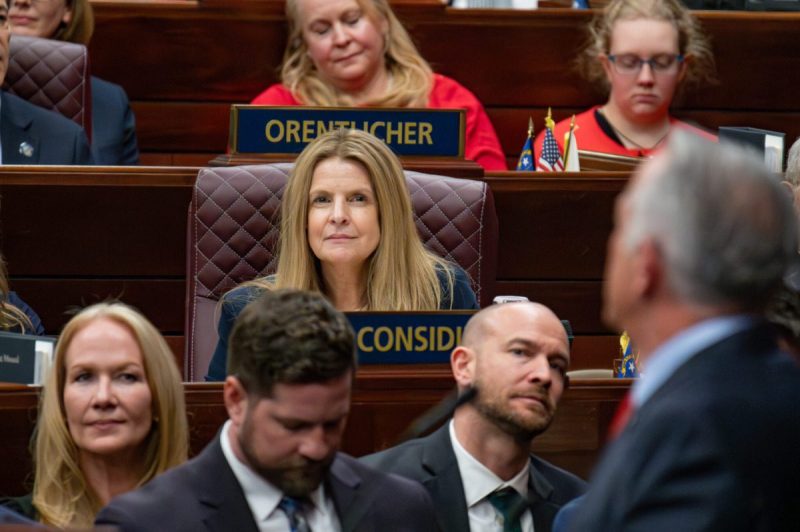
“Everyone should have access to power, especially in a state like Nevada,” said Democratic Assemblywoman Venicia Considine.
Considine sponsored AB250 in 2023 and AB259 in 2025, both of which passed a Democrat-controlled state Legislature with each Republican voting no. The policies mirrored provisions of then-President Joe Biden’s 2022 Inflation Reduction Act, which allowed the government to negotiate the prices of the “highest use, most expensive and most life-saving drugs for Medicare,” she said.
Her proposals—which were vetoed by the governor—would have opened the door for Nevada to do the same thing, but for all Nevadans statewide, not just those on federal support. Considine said the policies would have reined in prescription drug prices for chronic illnesses such as blood cancer, diabetes, and rheumatoid arthritis, restricting places and providers from charging more than the Medicare-negotiated price.
Based on what Considine heard, “across the spectrum of the Medicare drug, health care space,” opponents of the proposals said the measures would cause pharmaceutical companies to stop selling the drugs in Nevada, citing market structure frailty due to a lack of wholesalers.
“It’s very much like the argument is you can’t fix this, because if you fix this, everything falls apart,” Considine said. “I have a hard time believing that multi-billion dollar vertically-integrated companies can’t figure out math or put a human life on the same balance.”
According to the Centers for Disease Control and Prevention, heart and chronic liver disease, cancer, and diabetes are leading causes of death in Nevada. The United Health Foundation found that 11.9% of Nevadans have three or more illnesses such as chronic kidney disease, cardiovascular disease, asthma, cancer, depression, or diabetes.
Lombardo blocked AB259, citing undetermined fiscal impacts and potential drug availability issues as reasons for rejecting the bill in his veto message. His veto message on AB250 carried a similar sentiment, stating the policy “would set arbitrary price caps in Nevada based on federal decisions with no review or consideration from state stakeholders.”
Money followed vetoes
Lombardo’s fundraising efforts surged with pharmaceutical dollars following his health care vetoes. Donors representing pharmaceutical companies that manufacture various medicines, including those for liver and kidney diseases, as well as for chronic illnesses such as HIV, flocked to his campaign and dark money groups after the 2023 legislative session.
Just months after Lombardo rejected AB250 in the summer of 2023, his campaign and PACs received $80,000 from pharmaceutical companies, The Nevada Independent reported.
The following year, his political action committee, Nevada Way PAC, raised $50,000 from the pharmaceutical industry.
In the fundraising period after Lombardo’s veto of AB259, he received more than $28,000 in direct contributions from pharmaceutical companies to his second term campaign. Meanwhile, his Nevada Way PAC amassed more than $101,000 from Big Pharma during that same time frame.
These large fundraising hauls stand in stark contrast to his initial fundraising results, which yielded only $7,500 from pharmaceutical interests. Democrats accused Lombardo of putting drug companies over Nevada families.
“Joe Lombardo could have lowered the price of prescription drugs for all Nevadans, but instead, he vetoed groundbreaking legislation and sold out Nevada families all for his own selfish political gain,” a spokesperson for the Nevada Democratic Party wrote in a June 2025 press release.
When asked how Lombardo’s administration plans to lower health care costs for Nevadans, his spokesperson pointed to several initiatives, including funding for a provider recruitment plan, and investments into health care infrastructure, such as $4.5 million for the Graduate Medical Education program “to help train and retain the next generation of doctors in Nevada.”
The spokesperson also highlighted a similar health care strategy used by the Trump administration: deregulation. On the other hand, Lombardo’s administration also created a new governmental body for health care.
“During the 2025 legislative session, Governor Lombardo championed Senate Bill 494, which established the Nevada Health Authority,” his spokesperson wrote in a statement shared with The Nevadan-El Nevadense. “This reorganization of the state’s health and human services agencies will streamline services, reduce bureaucracy, improve care coordination, and help ensure taxpayer dollars are used efficiently.”
CORRECTION: An earlier version of this article cited just $55,000 in donations from the Healthy Nevada PAC.