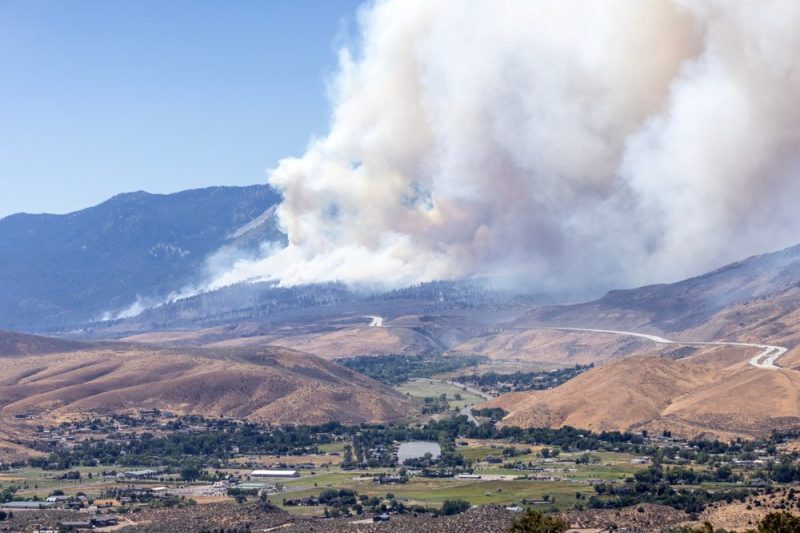
By Jaedyn Young, Reno Gazette Journal
Local fire chiefs say Memorial Day is the new Fourth of July—at least for wildfire safety measures.
Reno Fire’s Division Chief Pete Briant said due to record-high temperatures in March, the peak of the fire season may start a lot sooner than Reno residents are used to.
“This year, it’s like you want to be treating fire safety more like you would around Fourth of July than you would on Memorial Day. Things are just shifting this year to potentially more of an earlier time frame,” Briant said.
But the anomaly of 80-degree weather in March is only part of the problem.
Dawn Johnson, warning coordination meteorologist with the National Weather Service in Reno, told the RGJ that the region is in a snow drought.
Even with all of the snow that the Reno-Tahoe region got during the February storm, the high temperatures have caused the snow to melt too fast.
Johnson said normal meltout times peak in April through July, but this year the peak occurred in March, putting Reno about six weeks ahead of schedule.
August Isernhagen, the Truckee Meadows Fire Protection District’s division chief of wildland fuels, said because the mountains are usually still snow-topped during this time of year, keeping plants and soil hydrated, they aren’t as stressed for fires sparking until after it melts in late spring, early summer.
But this year, the region has a wet valley, which means more plant growth that could dry out faster, and mountains without snow that may also dry up earlier than normal.
“This is the first time in my career where we’ve had this weird anomaly of both scenarios,” Isernhagen said. “Both the valleys and the mountains will be burnable this summer, and then with this heat, they will both be burnable earlier than normal which makes our fire season potentially longer.”
A colder storm of rain and snow whipped through the region to kick April off, but Johnson said there would have to be a major storm or weather system to really see significant changes.
“Is this (storm) going to save us? No, but it will at least help kind of delay the inevitable a little longer,” Johnson said.
Sometimes, late spring and early summer rain could help, but Johnson said the three to four week outlook is favoring warmer and drier conditions returning.
“The recipe is there to have a really bad year,” Isernhagen said.
But all three experts say the best way to stop a fire is to not start one—since most Nevada wildfires are caused by people.
They warn everyone to never do fire-starting activities on high-wind warning days, on red flag warning days and pay attention at all times when it comes to activities that could start a fire.
“If a fire does ignite, it’s going to be that much more susceptible to get bigger faster,” Briant said. “We want to convey to the public to have increased vigilance earlier in the year.”
How to prepare for a fire
The TMFPD and Reno fire officials remind the public that fire season is year-round, and even big fires can happen year-round, like the Caughlin Fire in 2011 that burned in November.
So both departments said Northern Nevada residents should start preparing for fires now.
This means spring cleaning, creating or improving defensible space around your home by getting rid of things like cheatgrass before it dries up. Isernhagen said home hardening with screens on vents and covers on gutters can help.
And if you’re unsure what to do, TMFPD said they partner with UNR for the “Living With Fire” program that has lots of tips on how to improve your fire safety.
Isernhagen also said a big thing people must remember is to be aware of how to get out if you need to evacuate. Residents may be used to travelling the same way when they commute to work or go to the grocery store, but he said to drive around your neighborhood and make sure you have one or two back-up plans for how to get out in an emergency.
Briant said trailers dragging a chain on the road, throwing cigarette butts out the window, using outdoor equipment like lawn mowers, or not putting out campfires properly can all lead to wildfires, so he encourages people to pay attention to their actions on all days, but especially hot, dry or windy ones.
USA TODAY Network via Reuters Connect