By Carly Sauvageau, Reno Gazette Journal
The weather is warming up, days are getting longer and the change from winter to spring may inspire Nevadans to go out for hikes soon. While on the trail, they might see a snake and wonder if it’s dangerous.
It’s unlikely, given that of the venomous snakes that live in the state, only one species resides in Northern Nevada. This species of snake is typically antisocial and avoids humans.
However, people should still be prepared for what they will come across on the trail.
Here’s a guide to what snakes are venomous throughout Nevada, how to spot them and what to do if you are bitten.
How do I spot a rattlesnake?
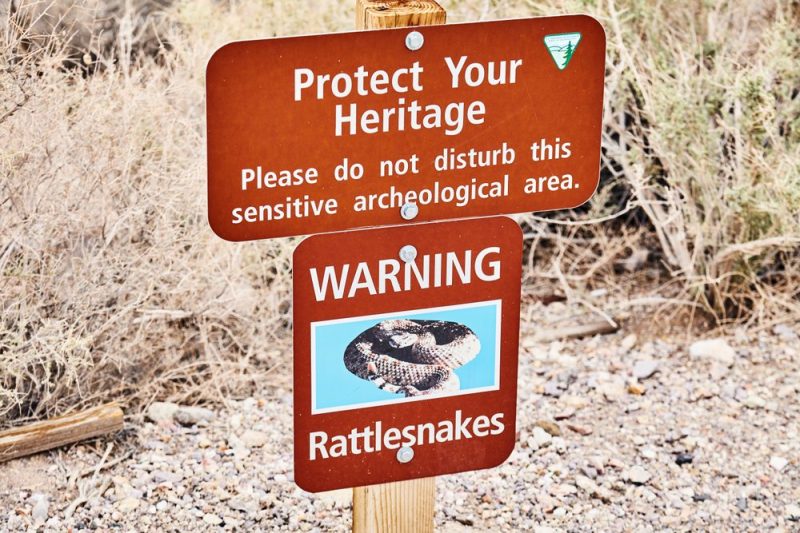
Rattlesnakes in North America typically have thick bodies, arrow-shaped heads and a rattle at the end of their tails that they shake when threatened. Five kinds of rattlesnakes are found in Nevada, mostly in the southern and central areas of the state. However, one species ranges across the Silver State — and it’s the one Northern Nevadans are most likely to encounter on a hike.
Great Basin rattlesnake
The Great Basin rattlesnake is the most common venomous snake in Northern Nevada and is found statewide. These snakes typically live in grassy, shrubby and rocky areas.
They are typically light brown with darker spots running down the center of their back. Their spots can come in shades of brown, gray, olive and yellow, according to the Nevada Department of Wildlife.
Sidewinder
Sidewinders are typically found in sandy terrain within areas of dense vegetation, where animal burrows provide shelter. They are also sometimes found in areas with sparse vegetation, like sandy washes. Sidewinders are found in Southern and Central Nevada in parts of Clark, Esmeralda, Nye and Lincoln counties.
You can identify a sidewinder by the raised scales above its eyes, which resemble small horns on its triangular head. It is a heavy-bodied pit viper with a light brown body and darker markings that help it blend into the sandy desert habitat. Sidewinders move with a distinctive side-to-side, S-shaped motion and have a rattle at the end of their tails.
Mohave green rattlesnake
Similar to sidewinders, these snakes prefer southern and central Nevada. They’re typically found in Nye, Esmeralda, Lincoln and Clark counties. Mojave greens are desert dwellers and favor areas with sparse vegetation.
They can be found in pre-existing animal burrows during the winter months.
You can identify a Mojave green rattlesnake by its characteristic olive scales and the brown/tan diamond pattern that runs down its back. NDOW said the Mojave green can look like a diamondback, but its diamond pattern is more rounded, and the white stripes near its tail are also wider than the black ones.
Southwestern speckled rattlesnake
Southwestern speckled rattlesnakes are found only in a small region of southeastern Nevada in the Las Vegas Valley. This elusive species prefers canyons and rocky mountain areas in Clark County near the Colorado River.
The snake also has diamond markings, but they are less distinct because of its speckled pattern. It’s a large rattlesnake that can range in color from pale gray to dark brown. Its tail has alternating light and dark rings.
Western diamondback rattlesnake
The Western diamondback rattlesnake lives in the Mojave Desert at the southern tip of Nevada. It is the largest rattlesnake in the Silver State.
It has a light-colored body with diamond-shaped spots along its back. The diamond pattern is outlined in white and black. It also has alternating black and white bands on its tail.
What do you if a venomous snake bites you?
If you get bitten by a venomous snake, immediately call 911 and head to the nearest emergency room. Most hospitals have antivenom drugs and can advise you on how to proceed.
According to the Centers for Disease Control and Prevention, do not use a tourniquet, cut the wound or try to suck out the venom — these methods can make the situation worse.
What do you do if a snake bites your dog?
Similarly to what you would do for yourself, call emergency veterinary services for your dog and immediately take it to the vet.
What do I do if I come across a rattlesnake while hiking?
If you come across a rattlesnake while on a hike, avoid it. Walk around it without stepping over it, and if possible, use surrounding rocks or clear ground to pass safely. NDOW recommends wearing long pants and avoiding thick brush while hiking.
If you’re hiking with a dog, keep them on a 6-foot leash and don’t allow them to put their heads into burrows, NDOW advised.
USA TODAY Network via Reuters Connect