Collapse of informal housing program raises concerns about homelessness resources amid federal funding uncertainty.
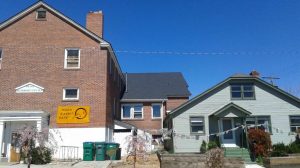
A change in management at Hebron Apartments in downtown Las Vegas quickly triggered rent increases and forced relocations for low-income renters, including at least 30 Help of Southern Nevada clients, according to the nonprofit’s CEO. The organization helps those struggling to secure housing by temporarily covering the costs of beds, while providing resources to put them on a path toward self-sufficiency.
Hebron tenants, many of whom were veterans, seniors, and people living with disabilities, had rents as low as $400 a month for several years, but have seen an increase. Tenants who pay monthly lease for $1,159 per month. However, the building also allows for weekly payments of $269 for base rent. This comes after the building previously operated as an informal housing program with 12-month leases, managed by a charity that sublet to low-income tenants.
Help of Southern Nevada CEO Fuilala Riley said in an interview with The Nevadan-El Nevadense that it had 30 clients at the former Hebron Apartments, with 11 remaining, who are in the process of relocation, hoping to beat the June deadline when rent is slated to go up.
“They let everyone know that, along with no longer having 12-month leases as an option, they were also going to increase the monthly rent,” she said of the new property managers, Advanced Management Group.
Relocations followed the eviction of Caridad Charity, which managed the property and subleased it to more than 100 tenants, according to Merideth Spriggs, its founder. She said the organization owed the landlord $40,000 in back rent at the time of eviction, which she attributed to delayed and reduced public funding.
Las Vegas city officials said tenants were not immediately forced out, noting that the landlord had alerted tenants about changes in management, including a shift to weekly payments.
“Current tenants were not displaced or trespassed—and were offered the option to enter into new monthly lease agreements as the property shifted toward a weekly‑rental model,” Las Vegas City Council Spokesperson Jace Radke wrote in an email.
However, housing advocates say the changes are uprooting a community that once provided stability to low-income residents.
Spriggs described the situation as indicative of broader instability in homelessness services.
“So, I feel like, if anything, maybe we’re the canary in the coal mine for homeless services,” she said.
The developments come amid uncertainty surrounding federal funding for permanent housing solutions that address homelessness.
Under the Trump administration, the US Department of Housing and Urban Development (HUD) updated policies last fall, capping homelessness resources for long-term permanent housing at 30%, with the goal to shift resources toward transitional housing, Politico reports.
The Continuum of Care (CoC) program partners with nonprofits to help people experiencing homelessness find housing and funds 25% of permanent housing solutions in Nevada—as well as 20% of rapid re-housing programs—according to The National Alliance to End Homelessness.
The group estimates that the cuts could reduce permanent housing grants by more than $13 million in Nevada, putting 925 people at risk of losing housing, including 738 beds in Clark County and 139 beds in Washoe County.
According to the New York Times, cuts could have been felt as early as January. Although a federal judge blocked the change in December, according to Politico. But concerns remain.
Riley said her organization serves more than 800 people across various housing programs, with most of their funding for “chronically homeless permanent housing” coming from HUD’s COC program.
Despite funding changes being held up in court, Riley said she predicts some sort of overhaul for federally supported permanent housing under the current administration. Her biggest concern is how to shift people when the cuts come down.
“Once you’re in permanent housing, you can’t step down to transitional (housing),” she said. “And so what we’re going to have to do as a community and as a state is discuss how we prioritize to keep folks housed.”