Could Nevada’s economy be at risk from online “commodity” betting?
A high-stakes bet over who President Donald Trump will nominate as new chair of the US Federal Reserve has drawn hundreds of millions of dollars on the world’s largest prediction betting platform—Polymarket.
The wager, which is estimated to end by Dec. 31, has attracted more than $245 million across various scenarios and outcomes, according to the platform, despite the seat still being held by Jerome Powell, whom Trump wants removed. Predictions websites such as Polymarket, valued at $9 billion, and Kalshi, the highest-valued in the world at $11 billion, allow users to bet on everything from sporting events to political speeches, economic outcomes, elections, and cultural and global events using cryptocurrency through online accounts.
A top Nevada Democrat is concerned that the growing activity poses a threat to national security and is calling for the Commodity Futures Trading Commission (CFTC) to regulate the industry. The push follows a 2022 CFTC fine of $1.4 million against Polymarket, which led to its relaunch barring US users.
“Prediction markets are rife with legal issues that the CFTC refuses to address,” said Democratic Nevada Sen. Catherine Cortez Masto.
The gambling style has existed for decades, but it gained renewed criticism this year when a user won more than $406,000 by predicting the US capture of Venezuelan President Nicolás Maduro by the end of January. The timing of the $30,000 bet raised serious concerns, as it was placed days before the capture, according to the Guardian.
“The suspicious activity on Polymarket directly preceding the capture of President Nicolás Maduro is just the most recent example,” Cortez Masto added.
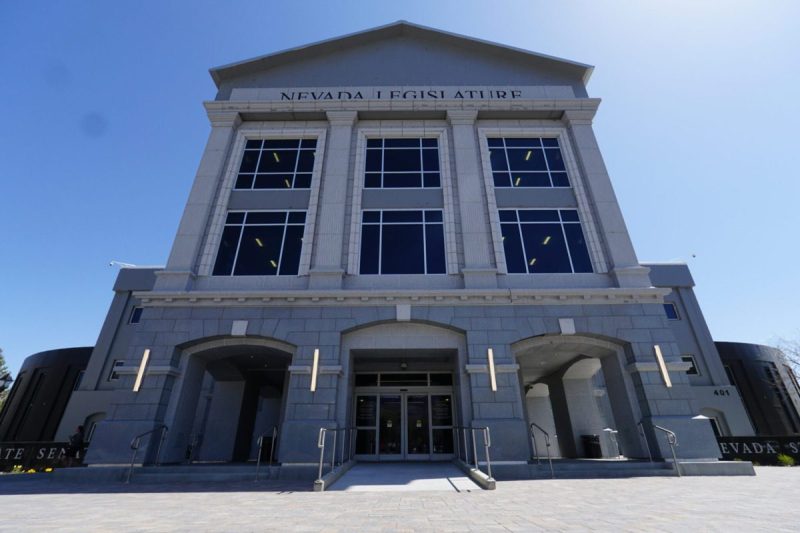
Locally, Nevada’s policymakers are looking to examine gambling activity at this summer’s Interim Finance Committee, Democratic state Sen. Dina Neal told The Nevadan-El Nevadense. She said that, given the state’s historical reliance on a betting-based economy, Nevada could help inform potential federal regulations, stating that prediction markets are “sliding by states that have gaming or betting.”
“It impacts us, because gambling and sports betting is heavily regulated in Nevada,” she said. “And if it is happening, then it is something that needs to be regulated and controlled.”
Neal said that companies like Polymarket and Kalshi circumvent state gambling laws because prediction firms classify bets as “commodities,” aligning the activity with stock trading on Wall Street. These firms also argue that their platforms foster direct exchanges between people and generate revenue from transaction fees rather than incurring losses, which separates them from casinos.
That didn’t stop the Nevada Gaming Control Board and the Nevada Gaming Commission from seeking an injunction on Kalshi for sports betting last year. A district court judge ruled in favor of Nevada gaming regulators, barring Kalshi from “unlawful activity” due to its lack of oversight and its similarity to casino sports betting offerings. The company now awaits the appeal it sought, while lawmakers could soon introduce regulatory policies.
Neal said this coming summer that lawmakers will focus on regulating prediction markets, raising concerns about political betting while emphasizing the need to protect “gaming interests.” No specific policies have been identified at this time. However, a decision is pending from stakeholders—including gaming officials and lawmakers—on whether a statute is necessary. This statute would enforce existing gaming laws on prediction platforms to ensure state revenue.
In the meantime, Neal plans to monitor betting activity on predictions ahead of the finance meeting, which will take place in July or August.
“We receive a significant portion of our general fund revenue from gaming,” Neal said, “And if there is something that is going to impact that, number one, it needs to be dealt with.”
To stay abreast of state finance meetings, go to the Nevada government website.