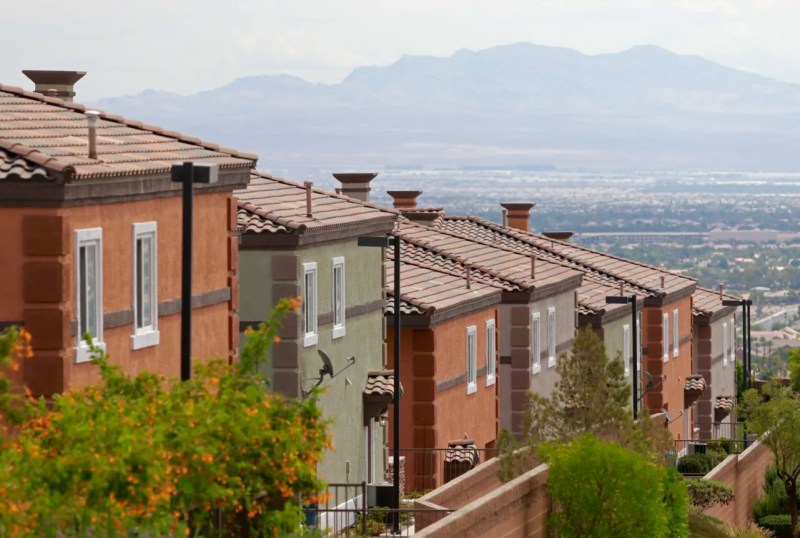
Lawmakers’ $133 million housing account will fund hundreds of homes and rentals for low- and middle-income earners.
Nevada state lawmakers approved a $133 million appropriation for the “Nevada Attainable Housing Account” (NAHA) to address the critical shortage of housing supply statewide during the 2025 Legislature. This allotment creates subsidized housing for a specific segment of the market—buyers earning up to 150% of the area median income (AMI) or up to $153,000 a year for Las Vegas and $165,000 in Reno, Nevada Current reports.
More than $83 million has been recommended for development projects by the Nevada Housing Division. The allocations from the Nevada Housing Division would bring 358 attainable homes for sale online and 1,208 multifamily rentals, including two supportive housing developments, according to the report.
NAHA recommends $30,860,503 for Southern Nevada and $20,979,476 for Northern and rural areas, to which about $60 million will be distributed as loans and estimated to bring $40 million back to the state “to be redeployed within 4 years of the initial distribution.”
“The program’s strengths include leveraging state dollars to attract private investment and supporting projects that can move forward quickly,” Maurice Paige, executive director of the Nevada Housing Coalition, said about the attainable housing account. “At the same time, Nevada will need sustained funding and continued focus on households with the greatest affordability challenges to ensure long-term impact.”
Nevada is short 78,000 extremely low-income homes, according to the National Low Income Housing Coalition, which translates to 17 apartments per 100 extremely low-income renters, compared to 94 available units per 100 residents earning 100% AMI.
Of the allocation, $15 million went to developers using low-income tax credits.
The move comes as Nevadans grapple with a volatile housing market post-pandemic, and one of the nation’s most severe shortages of low-income housing, raising concerns about the program.
This led Laura Martin, executive director of the Progressive Leadership Alliance of Nevada (PLAN), to question the effectiveness of this approach to Nevada’s housing gap. She said that, to strengthen housing, lawmakers should first provide tenants with strong protections “to prevent landlords from abusing our lax state laws to raise rents, evade accountability, and unjustly evict Nevada families.”
“Nevada’s housing crisis will not be solved solely by building more housing units,” Martin wrote in a statement for The Nevadan-EL Nevadense. “It’s not sustainable, especially when homes are being held vacant as investment properties.”